Healthcare marketers have grown to be nervous about having the Meta Pixel on their websites. It’s quite well known that most of the lawsuits filed against healthcare companies centered around having the Meta Pixel on a site. The first lawsuit that made me aware of tracking lawsuits was about the Meta Pixel. It’s what I’ve most warned our healthcare clients about.
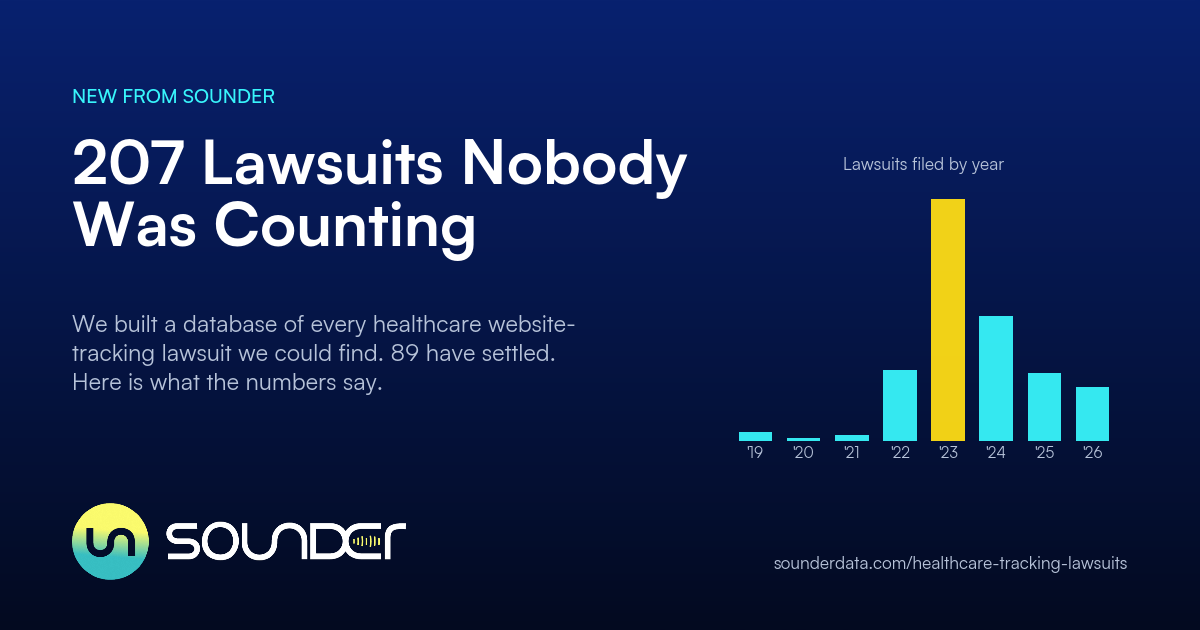
Recently my thinking and conversations have changed. We just released a public database of healthcare tracking lawsuits (207 matters and counting). One of the first things I did when the database was finished was sort the cases by the year they were filed. Very quickly a different picture showed up. Google is the only tracker named in several new cases. Microsoft, Pinterest, LinkedIn, and session-replay tools are also showing up in complaints. One brand-new case is built around only a cookie banner.
The shift, in one chart
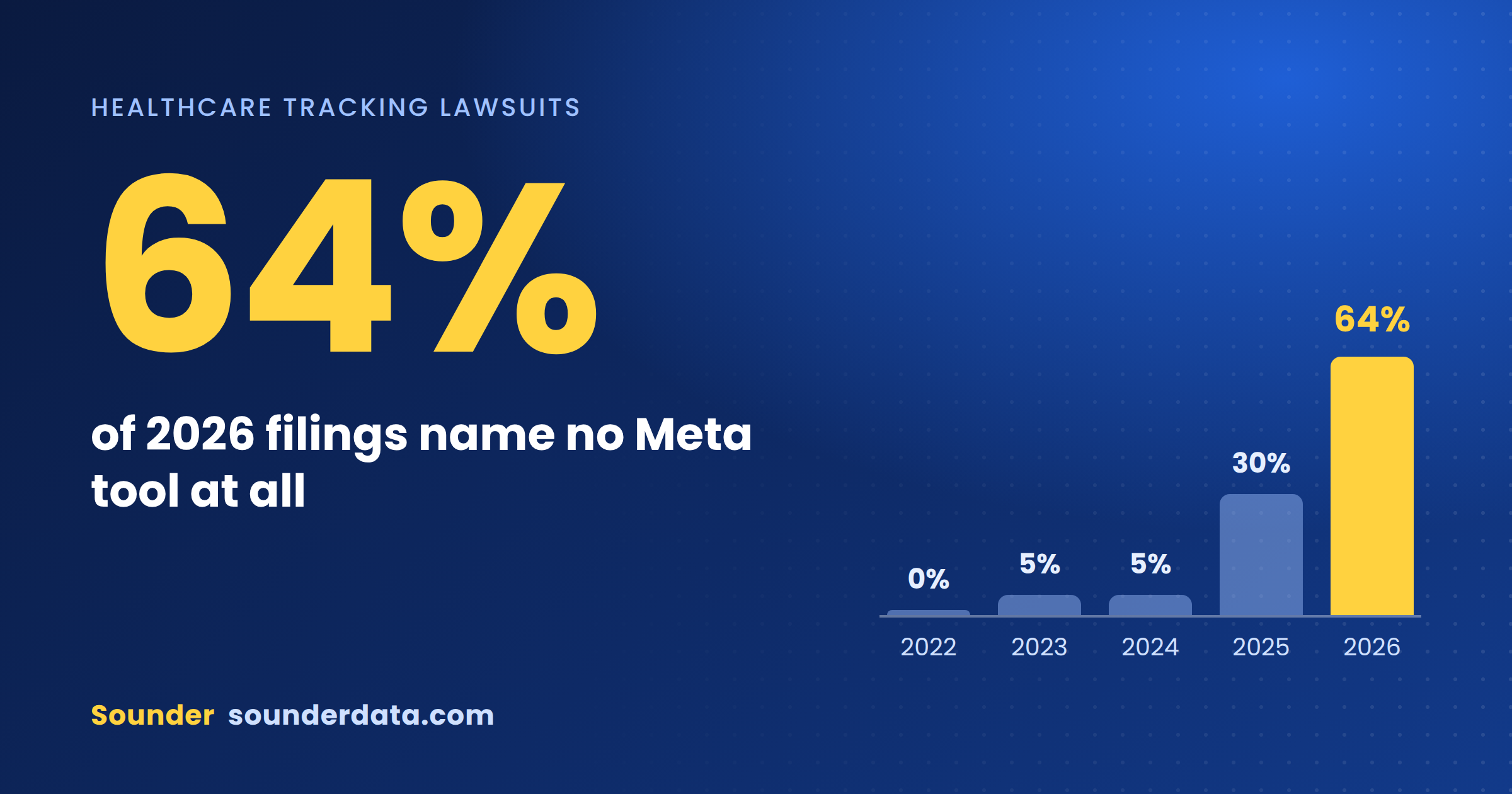
The chart below shows every tracking lawsuit that does not name a Meta product in our database filed from 2022 on, sorted by year.
Most 2026 tracking lawsuits don’t name a Meta tool
Share of lawsuits filed each year whose named trackers include no Meta product
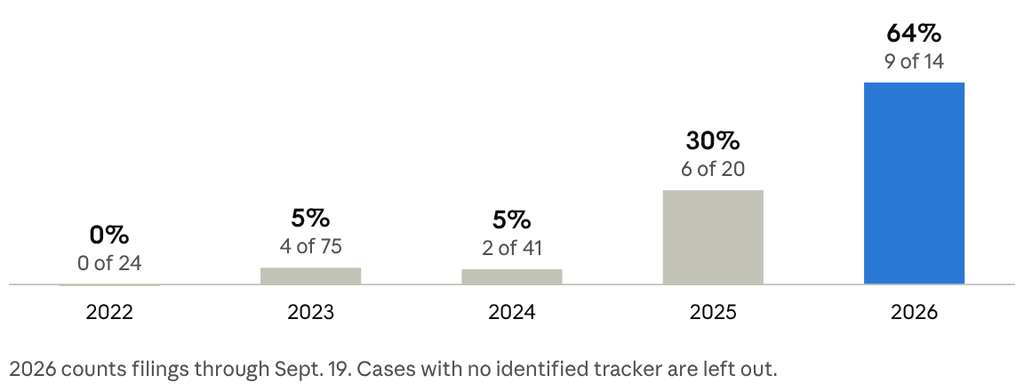
In 2022 every case in our data named Meta. In 2026, so far, nine of 14 don’t.
These numbers are small, and it’s only Oct of 2026. Our database is built from what we could find, so it misses cases that were not written about or filed publicly. And quite a few Meta cases are still working their way through the courts. But the trend seems pretty obvious.
A few 2026 cases that don’t mention Meta at all
Here are some recent filings where Meta isn’t named.
- Grady Memorial Hospital (Atlanta): A public hospital sued in May 2026 over Google Ads and Google Analytics. No Meta Pixel is alleged. (news coverage)
- Solis Mammography: A national breast-imaging chain sued in April 2026. The complaint names Google. (news coverage)
- The Orthopaedic Institute (Gainesville, Fla.): An orthopedic practice sued in April 2026 over Google Analytics 4 and AdRoll. (news coverage)
- Mount Sinai Medical Center (Miami Beach, Fla.): Sued in April 2026 over Google tools and already settled for $220,000. (settlement website)
- Holy Name Medical Center (Teaneck, N.J.): A 360-bed independent hospital sued in June 2026 over Google, Microsoft, and Pinterest trackers. Again, no Meta. (court docket)
- Thriveworks: A national behavioral health chain that settled for $1.9 million over Google and LinkedIn trackers on its patient portal. (settlement website)
- Novartis: In March 2026 a patient sued over Google and Contentsquare (a session-analytics tool) on the patient website for a breast cancer drug. It’s the first drug-manufacturer website in our data. (news coverage)
However, Google-only cases haven’t been slam dunks for plaintiffs. A federal judge in Atlanta dismissed the case against CRH Healthcare (Peachtree Immediate Care) in July 2026 (court docket), and the same judge threw out the case against Piedmont Healthcare in 2024 (news coverage). But winning a motion to dismiss still means paying defense lawyers for a year or two.
You can see every Google case we’ve found on our Google tracker page.
Why out-of-the-box Google Analytics isn’t a safe choice
Most healthcare marketers I talk to think of the Meta Pixel as an advertising tool and Google Analytics as a reporting tool. They seem to think that makes GA somehow safer. The lawsuits don’t see much difference. Both transmit information about what a visitor did on your site to a company that you don’t have a BAA with, and that sells ads.
In Doe v. Google, patients sued Google itself over Google Analytics running on thousands of healthcare provider websites. In June 2025 the judge let the wiretap and privacy claims go forward for conduct before 2023 and dismissed them for conduct after. The dividing line was Google’s own 2023 guidance telling customers not to send health information through its tools. (court opinion)
In essence, the court agreed that Google had “warned them” and it meant the website owner was responsible for transmitting the visitor information, not Google.
Session replay is the quiet one
Session-replay tools record what a visitor does on a page: clicks, scrolling, and sometimes what they type into a form. Marketers use these tools to optimize pages. Now the tools are showing up in lawsuits.
Microsoft Clarity is named in cases against Sarah D. Culbertson Memorial Hospital, a 22-bed critical-access hospital in Rushville, Ill. (complaint), Memorial Hospital in Carthage, Ill., with 18 beds (complaint), and Bayhealth in Delaware (news coverage). The insurer case against Elevance, filed in November 2025, describes session replay and pixels behind the member login (court docket). And Kaiser’s $46 million settlement, the largest in our database, names Dynatrace and Quantum Metric, two tools most people would call performance monitoring rather than advertising (fee order).
What the plaintiffs’ lawyers are really looking for
Lay these cases side by side and the vendor doesn’t really matter much. What matters is the page and the data. The most common pattern I believe is quite clear:
- A page that reveals something about health. A condition page, a doctor search, an appointment form, a patient portal, a drug brand site.
- A third-party script on that page. Meta, Google, Microsoft, Pinterest, TikTok, a session-replay tool. The name changes. The mechanism doesn’t.
- Data leaving the page for a company the website doesn’t have a BAA with, that uses the information for advertising or analytics.
Swapping one vendor for another doesn’t break that chain. Orlando Health’s complaint lists 13 technologies (complaint). Chestnut Health’s lists 24 (complaint). The FTC’s July 2026 complaint against Hims & Hers names 16 ad partners. (law firm summary)
Do you know what’s running on your site?
If you’d like to know what trackers are on your site, Sounder can scan your site and tell you what’s there in plain English. And our lawsuit database is free to browse. You can filter by tracker and see every case that names the tools on your site.
I have degrees in math and computer science, not law. This post isn’t legal advice. If you have questions about your organization’s exposure, make sure to talk with legal counsel.